AN E-LEARNING COURSE CATALOGUE THAT IS INCREASINGLY SUSTAINABLE AND ACCESSIBLE TO EVERYONE

The “Stanca Law” is a 2004 law (Official Gazette No. 13 of 17 January 2004) focused on “Provisions to facilitate access by persons with disabilities to IT tools”. In particular, the Law and its technical annexes mainly focus on the accessibility of IT services of the Public Administration, with the objective of removing barriers that limit or prevent disabled people from accessing digital tools and content.
The more recent Decree-Law 16 July 2020, No. 76, containing urgent measures for simplification and digital innovation extended the rules established for the Public Administration to specific private entities, introducing Art. 3 1-bis, which states:
“This law shall also apply to legal entities that offer services to the public through websites or mobile applications, with an average turnover, over the last three years, exceeding five hundred million euros”.
The entities to which the rule applies are required to comply with the provisions set out by Law 4/2004 within 3 years of the entry into force of the aforementioned decree (with progressive steps up to 2025).
WHAT MAKES AN E-LEARNING COURSE “ACCESSIBLE”?
According to the legislation, services created through IT systems that have the following requirements are accessible :
- accessibility to the content of the service by the user
- usability of the information offered, characterised by:
- ease and simplicity of use, ensuring that the actions to be carried out to obtain services and information are always uniform with one another;
- efficiency of use, ensuring separation between content, presentation and interface operating methods, as well as the possibility of making information available through different sensory channels (visual, auditory, multilingual, etc.);
- effectiveness of use and responsiveness to user needs, ensuring that the actions to be carried out to correctly obtain services and information are independent of the device used for access;
- satisfaction in use, ensuring access to the service and information without unjustified inconvenience or constraints for the user.
WHY FEEL INVOLVED?
Given the regulatory parameters, the law does not currently impose change on all companies; however, the issues of social sustainability and accessibility have long been in the spotlight, and CSIA, by offering digital applications for training, cannot fail to address these important inclusive aspects.
When offering our courses, our first concern is to provide a pleasant and useful experience for the person who will follow them. Easy accessibility for everyone is therefore an essential foundation.
WHAT DO INCLUSIVE AND ACCESSIBLE COURSES CONSIST OF?
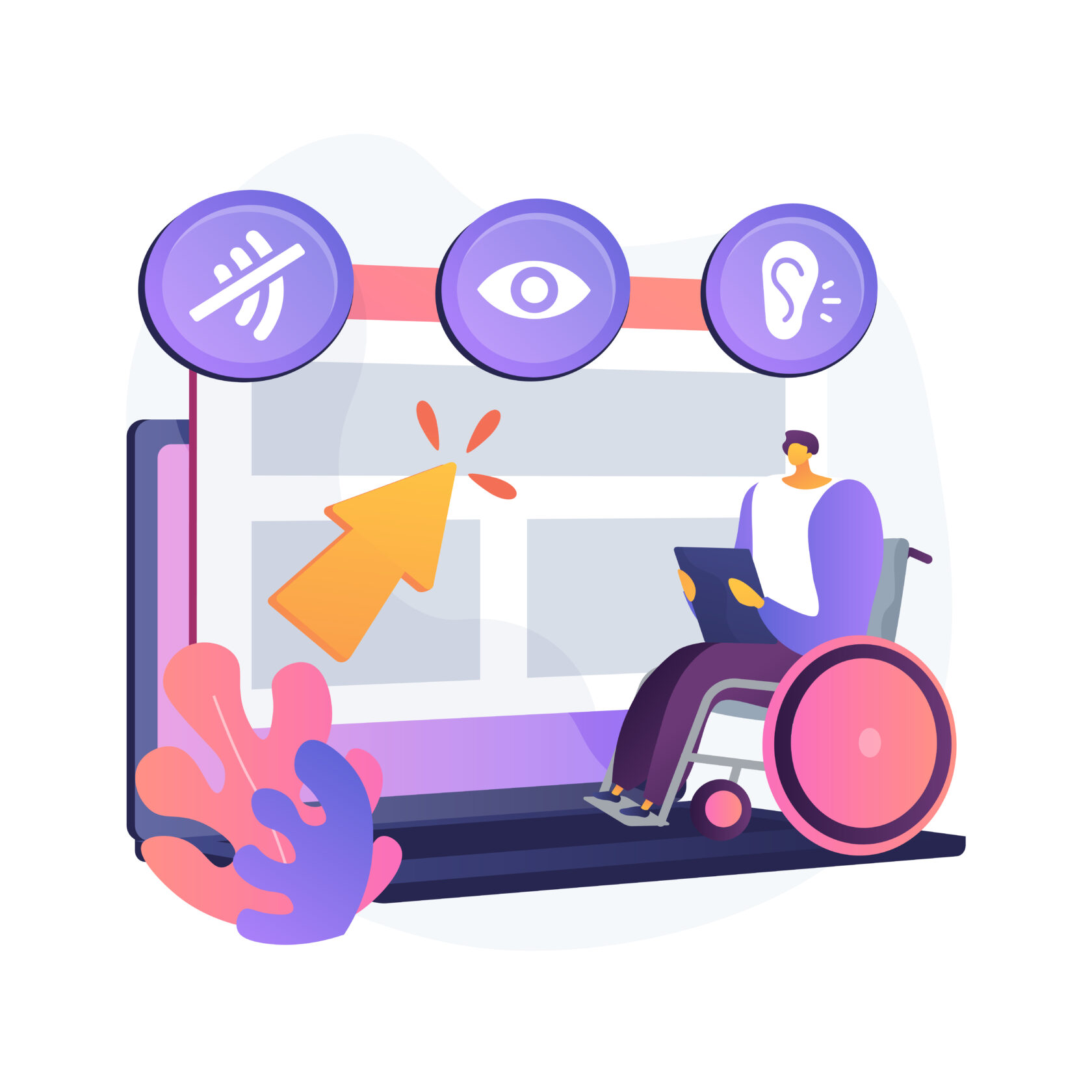
The new courses, available on our platform starting from January 2024, will include three requirements that facilitate accessibility for everyone:
- video subtitling and audio description (where necessary)
- adjustment of subtitle font size and contrast customisation
- multilingual support (Italian, English and Spanish)
In addition, on request, we provide the possibility of including LIS TRANSLATION, Italian Sign Language, in e-learning courses.
These functions allow deaf people or people with severe hearing impairments, and visually impaired people, to use the courses in an independent, complete and effective way.
Lastly, multilingual support can instead be a major opportunity for all Companies operating in an increasingly globalised and international world of work.
For further information and/or clarification: